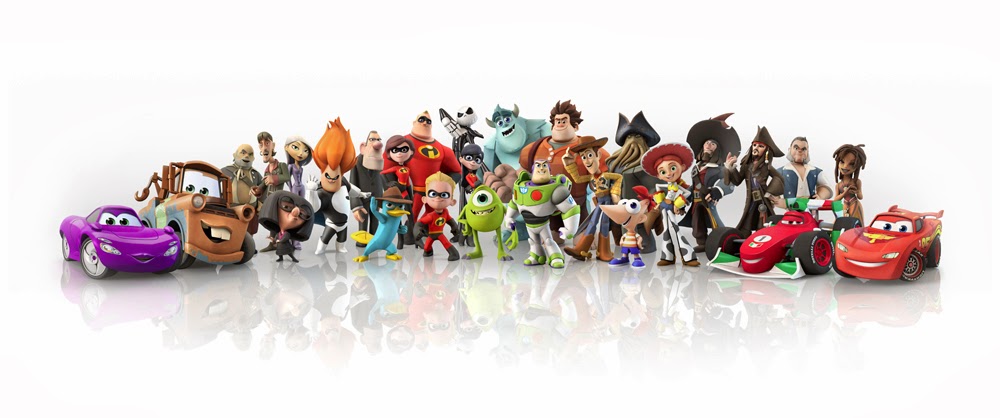
As writers, we are in a (privileged and somewhat daunting) position of being able to touch readers with our stories~ to have them find connections and parallels to their own lives within the pages of a book. To have them be inspired by characters who are real and flawed and frightened and brave, who face the dark and scary things in life, not without fear, but in spite of it. Characters who feel things, and think things. Characters who you'd like to hold hands with and bundle into your backpack to take with you for courage when facing your own challenges.

I'm absolutely thrilled to have Anne Ursu on the blog to talk about character development in middle grade literature. In addition to her novels for adults (Spilling Clarence, The Disapparition of James), Anne has written the middle grade books The Cronus Chronicles (a trilogy), Breadcrumbs, and The Real Boy. All of her MG books have characters who have stayed in my mind and heart long after I've turned the final pages. Anne teaches at Hamline University's MFA in Writing for Children and Young Adults, and lives in Minneapolis with her son and cats.
If you don't already own a copy of The Real Boy (beautifully illustrated by Erin McGuire), leave a comment on this post for a chance to win a hardcover. It is a very special book. And now, here's Anne:
How has your writing process evolved from The Cronus Chronicles to The Real Boy?
 |
| Breadcrumbs drawing: Erin McGuire |
I
wish I could say that I’ve really refined my process over these five books,
learned from my mistakes and grown each time. But it’s always the same: I start
with an idea, take some scattered notes, and then just plunge into the deep end.
It usually occurs to me a couple of chapters in that I have no idea what I’m
doing, and then I start snacking a lot to mask my despair.
I
suppose the thing I have learned is that the fear is okay. I’m always
terrified—but I’ve realized there’s no point in knowing how to write a book you
already know how to write. You learn how to write a book by writing the book,
that’s all. This doesn’t make it any easier when you’re staring down an endless
tunnel with only the sputtering light of your own ignorance to guide you, of
course.
Once
you have a character in mind and a situation to challenge him/her with,
how do you go about developing that character?
 |
| From The Real Boy |
As you may have
guessed from the above, I’m a very fly-by-the-seat-of-your-pants writer. It’s
more intuition than planning for me—I just start the book with a feel for the
character and see what happens. I tend not to worry too much about what a
character would or wouldn’t do, at least during the first draft—if they are doing
it, then they would do it.
So, for example, with
Hazel in Breadcrumbs, I was thinking of a comment a friend got on a report card
in elementary school—“She’s doing better but she still stares out of the window
and appears stupid.” That summed up the whole character to me; she had a strong
imagination but no one really appreciated it. And then I just started writing,
and everything unfolded.
You learn a bunch
about your character by the end of the book, and usually most of my rewriting
happens at the beginning. Also, I seem
to have a tendency in my first drafts to make my characters, in my editor’s
words, more pitiable than sympathetic. So that requires a little bit of
attention.
Agents and editors have said
that the middle grade voice is one of the hardest to write. What advice
would you give a middle grade writer who has plenty of plot ideas, but
struggles to find their characters' authentic voice?
 |
| From The Real Boy |
Read.
Read out loud, and listen to audio books. Take apart the books you like—what
elements make up the voice? How did this author create the sound of the
character?
We
treat voice like an abstract concept, but it’s just the expression of character
on the page. How does your character talk? What kind of analogies might she
use—what are her interests and preoccupations? How self-reflective is she?
What’s her sense of humor like? What are her favorite words? Does she
exaggerate? How do her emotions affect her voice?
Sometimes
I have students write bits of journal entries from their protagonist. It sounds
cheesy, but every time I’ve done it the student captures something essential. It’s
just a great way to get a feel for how your character really expresses herself,
especially when she is living in a certain emotion.
In your opinion, what
are three elements that should be part of any middle grade novel
(i.e. action, humor, heart, ninjas, brownies, etc.)?
 |
| From Breadcrumbs |
I
want all my books to be summed up with the words “heart, ninjas, brownies.”
To
me, middle-grade is entirely character-driven. I think one of the reasons that
genre fiction is mainstream in books for young readers and not in books for
adults is that kids and YA books have richer characters at the center of the
story. The books still have a beating heart, someone to care about.
I
can’t think of a middle grade book that doesn’t offer kids strength or hope
somehow. I despise the idea that every middle grade book needs a perfect happily-ever-after
ending, but I think you want the main character to have something from the
experience of the book that’s changed her and you want to know she’s going to
be all right.
And
cats. There should be cats in every middle grade book. My prescription for
middle grade success: Character, hope, cats.
What’s your favorite thing
about teaching MFA courses in creative writing at Hamline University?

My
program is a low-residency program in children’s book writing, and so most of
the time I’m at home writing editorial letters on student work—we communicate
by email. And then twice a year everyone in the program meets on campus for
very intense ten-day residencies with workshops and seminars and lectures. I
adore my job. When you go to residency, you realize everyone around you loves
writing and children’s books and so “gets” you on that level—this is not an
experience writers get very often. And no one asks you when you are going to
start writing real books.
And so I’m learning along with the students, and the chance to dive deep into someone else’s writing helps your own grow by leaps and bounds. But my very favorite thing is watching someone’s writing transform in the program—they just find their spark. It’s amazing to watch.


A huge thanks to Anne for answering questions! Please leave a comment to be entered in The Real Boy giveaway (the winner will be announced next Friday). To find out more about Anne and her books, you can visit the following places:
Anne Ursu's Website
Anne Ursu on Twitter
And here are two recent essays by Anne that you don't want to miss:
But What About the Children (an essay on how we talk about middle grade)
On Gender and Boys Read Panel


 SLEEPY HOLLOW, NEW YORK- Both in written and Disney form, Washington Irving’s The Legend of Sleepy Hollow, is a beloved and spooky tale. It takes place in the Dutch settlement of Tarry Town (based on Tarrytown, New York) in an isolated glen called Sleepy Hollow.


 ORE, DENMARK- Much of the Shakespeare play Hamlet takes place in Elsinore Castle in the Kingdom of Denmark. The actual castle you would visit these days is called Kronborg Castle (click